
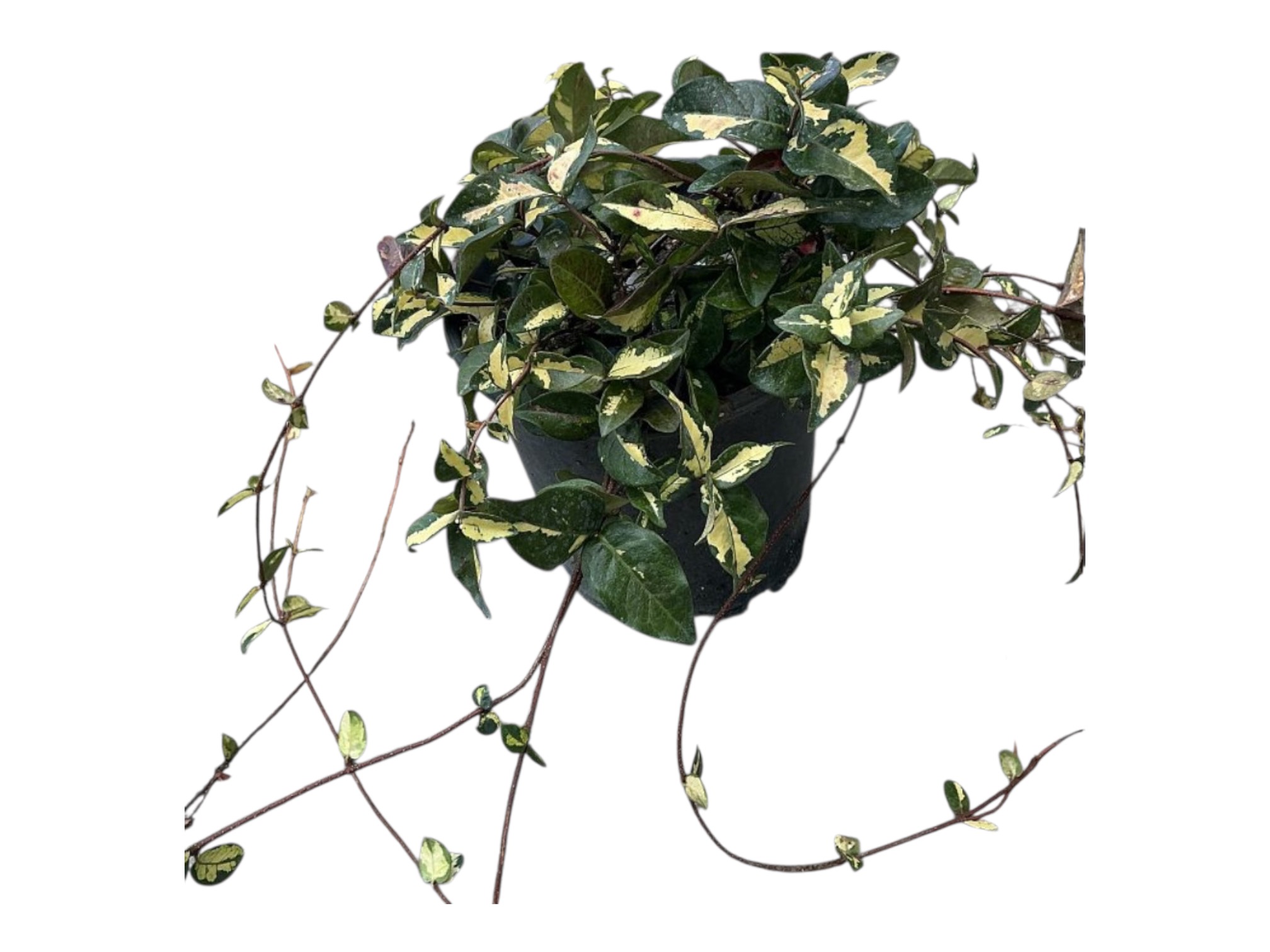

General Landscape Uses: Ground cover, container, border, accent
Ecological Restoration Notes: Not typically used in native ecosystem restoration, as it is a cultivated horticultural selection (cultivar) of an Asian species and can escape cultivation in mild climates.
Description: Evergreen, glossy, small oval leaves with a vivid, kaleidoscopic variegation. New flushes emerge in brilliant shades of red, orange, and golden-yellow, maturing into a complex mosaic of deep green, yellow, cream, and bronze. Low-growing, spreading, woody vine and ground cover that forms a dense, mounding mat.
Dimensions: Height 6 – 12 in.; Spread 18 – 36 in.
Growth Rate: Moderate. Slow to establish during the first year while building a root system, then moderate as runners fill in the space.
Native Range: The species Trachelospermum asiaticum is native to woodlands, thickets, and rocky slopes across Japan and Korea. The ‘Summer Sunset’ cultivar was artificially selected in cultivation.
Native Habitats: Native species typically inhabit woodland edges, forest floors, and low mountain slopes in temperate to subtropical Asian regions.
Soils: Highly adaptable to sandy, loamy, or clay soils. Requires well-drained soil; prone to root rot if left in standing water or poorly drained clay.
Nutritional Requirements: Low to moderate. Apply a balanced, slow-release granular fertilizer or organic compost once in early spring. Avoid excessive nitrogen, which can dull the vibrant red and orange leaf tones.
Salt Water Tolerance: Low to moderate. Does not tolerate direct immersion in salt water or saline marsh soils.
Salt Wind Tolerance: Moderate. Exhibits good tolerance to coastal salt spray, making it suitable for coastal garden landscapes.
Drought Tolerance: High once established. While it appreciates regular moisture during its first growing season, mature plants withstand extended dry spells well.
Light Requirements: Full to part sun
Flower Color: Creamy white to pale yellow.
Flower Characteristics: Small, star-shaped, pinwheel-like blossoms with a sweet, rich fragrance reminiscent of jasmine.
Flowering Season: Late spring through mid-summer.
Fruit: Rarely produces fruit in cultivated landscape settings (infrequently forms paired, slender follicle pods containing winged seeds).
Wildlife and Ecology: Flowers offer nectar to localized pollinators such as bees and butterflies. The dense, evergreen mat provides protective cover for small ground-dwelling wildlife, though it is famously resistant to browsing by deer.
Horticultural Notes: Easily propagated via stem cuttings or layering during the active growing season.
Comments: Very low-maintenance once established. It is non-invasive compared to aggressive vines like English ivy, but trailing stems can root where they touch the soil if left unchecked, allowing it to gradually expand its footprint.




Reviews
There are no reviews yet.