
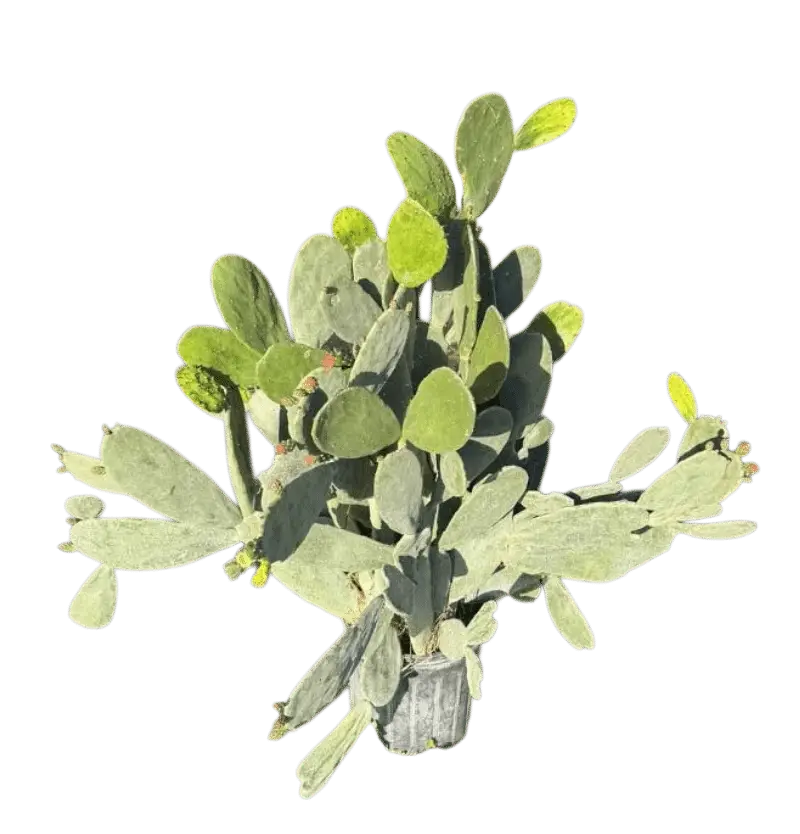

General Landscape Uses: Excellent for xeriscaping, rock gardens, and coastal landscapes. Due to its spines, it serves as an effective security barrier or “living fence.” It is often used as a bold focal point in low-maintenance garden beds.
Ecological Restoration Notes: A vital component for dune stabilization and dry prairie restoration. It provides critical habitat and food in environments where few other plants can survive.
Description: A succulent perennial characterized by flattened, fleshy green segments called cladodes (pads). These pads are covered in large spines and smaller, irritating barbed bristles called glochids.
Dimensions: Height 2 – 3 ft.; Spread 4 – 6 ft.
Growth Rate: Moderate
Native Range: Found throughout the Americas, including most of the United States and all of Florida.
Native Habitats: Sandy coastal dunes, dry pine flatwoods, and scrublands.
Soils: Well-drained, sand
Nutritional Requirements: Low
Salt Water Tolerance: Moderate
Salt Wind Tolerance: High
Drought Tolerance: High
Light Requirements: Full Sun
Flower Color: Bright Yellow, often with a red or orange center
Flower Characteristics: Large, cup-shaped waxy blooms that appear along the upper edges of the pads.
Flowering Season: Late spring to summer
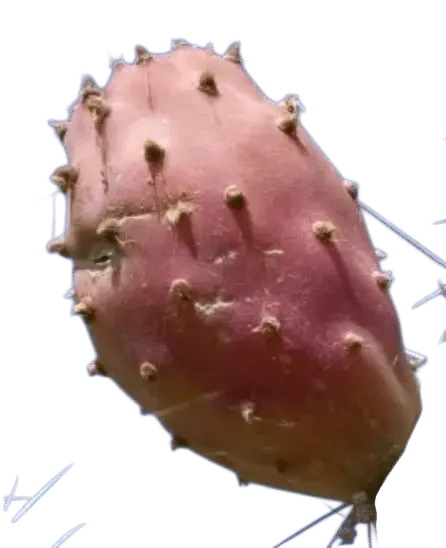
Fruit: An edible, fleshy red or purple berry known as a “tuna” or prickly pear fruit.
Wildlife and Ecology: A high-value plant for pollinators, especially native bees. The fruits are a prized food source for gopher tortoises, iguanas, and various songbirds.
Horticultural Notes: Grown from cuttings
Comments:




Reviews
There are no reviews yet.