
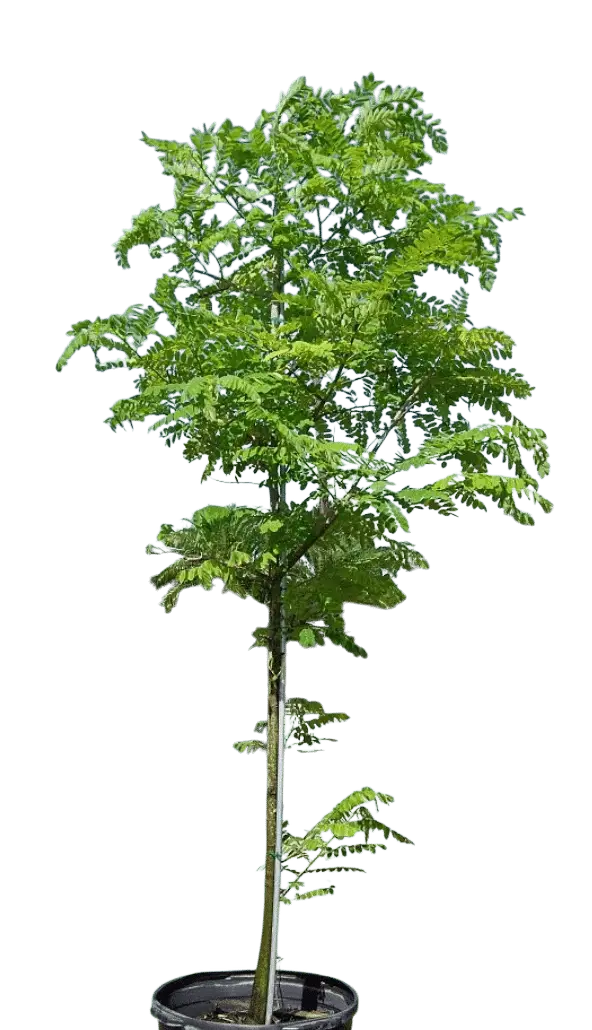


General Landscape Uses: A premier specimen shade tree for large gardens, parks, and wide median strips. Its spreading habit makes it an excellent choice for creating a “ceiling” over large patios or open lawns.
Ecological Restoration Notes: Not typically used in restoration projects outside its native range.
Description: A deciduous to semi-evergreen tree with a wide, spreading crown and elegant, drooping branches. The leaves are pinnately compound, giving the tree a feathery, tropical texture.
Dimensions: Height 25 – 40 ft.; Spread 30 – 50 ft.
Growth Rate: Fast
Native Range: Southeast Asia (Indonesia, Malaysia, Thailand, Philippines)
Native Habitats: Open forests and forest edges in tropical lowland areas
Soils: Well-drained, loam
Nutritional Requirements: Moderate
Salt Water Tolerance: Low
Salt Wind Tolerance: Moderate
Drought Tolerance: Moderate to high
Light Requirements: Full sun
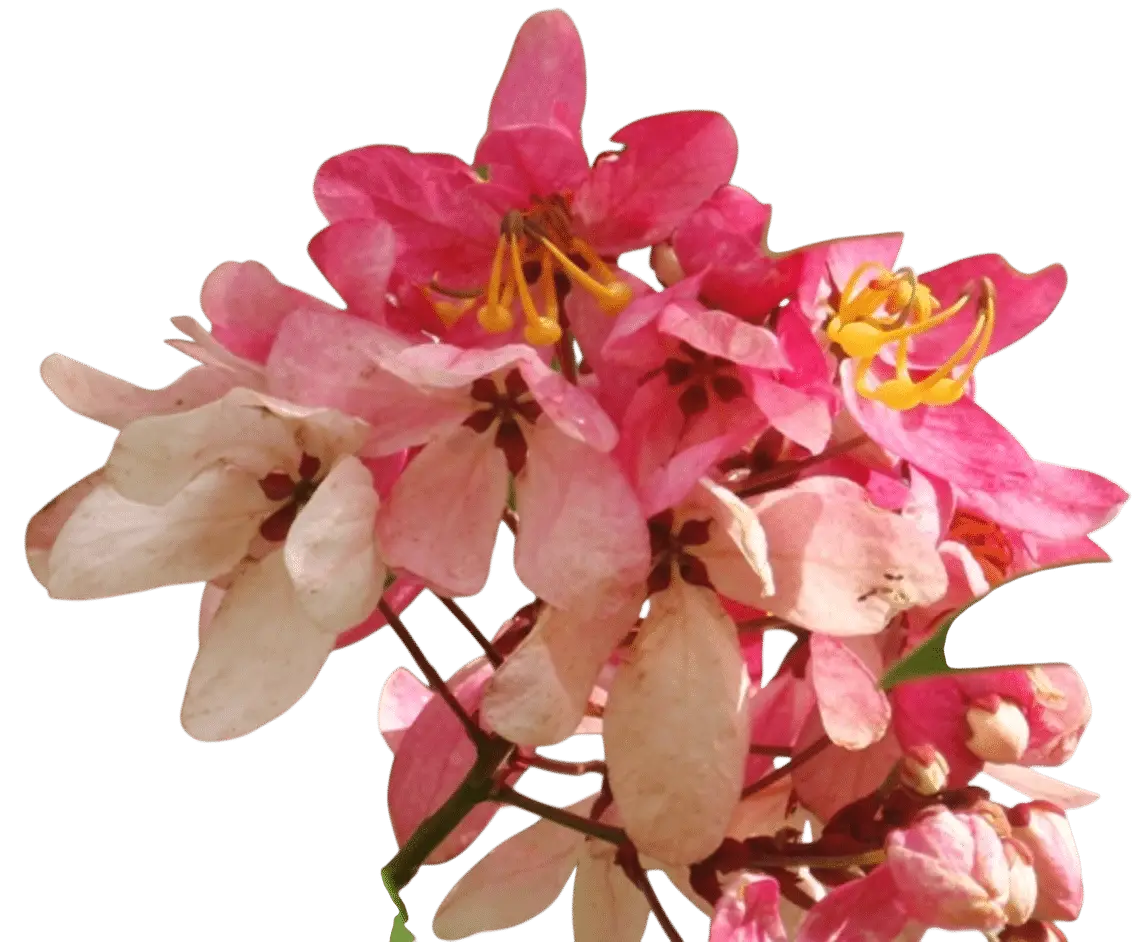
Flower Color: A mix of pale pink, rosy pink, and white (fading to gold as they age)
Flower Characteristics: Large, dense clusters (racemes) that cover the branches. Flowers have a delicate, sweet fragrance.
Flowering Season: Late spring to early summer
Fruit: Long, cylindrical, dark brown pods (up to 2 feet long) containing many seeds embedded in a sticky pulp.
Wildlife and Ecology: A major attractant for bees and butterflies. In its native range, the seeds and pulp are eaten by various small mammals.
Horticultural Notes: Propagated by seed, air layering, cuttings
Comments:





Reviews
There are no reviews yet.