
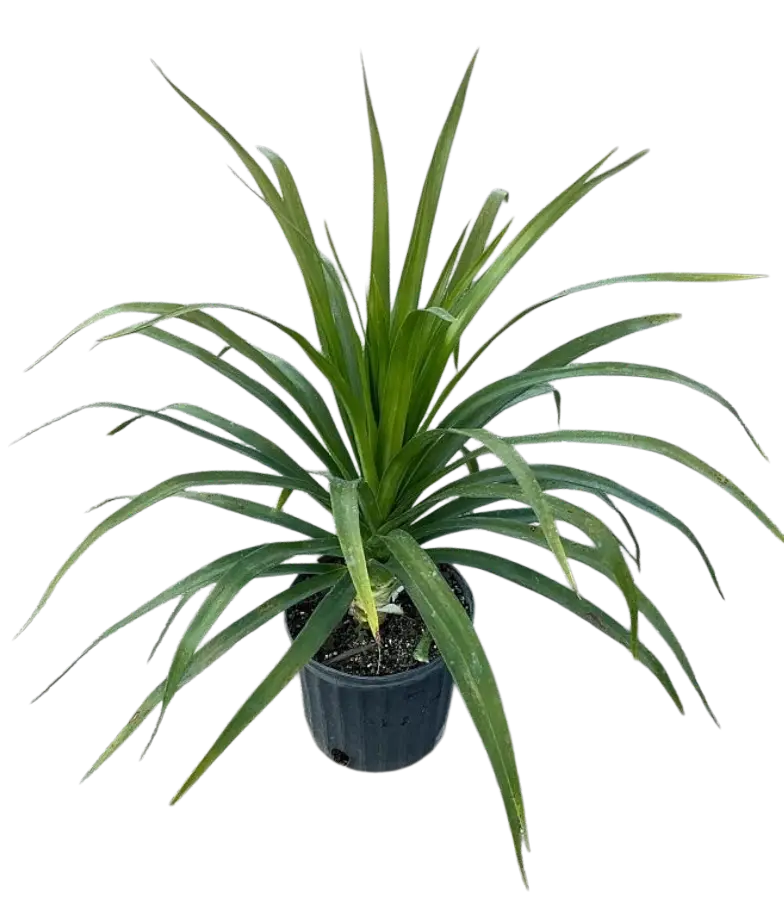

General Landscape Uses: Outstanding architectural focal point, vertical accent in narrow spaces, or a high-impact container plant for patios. It is often used to provide a “tropical evergreen” look in xeric (dry) landscapes.
Ecological Restoration Notes: Native to the secondary forests of West Africa. It is a hardy pioneer species there, but in the Americas, it is strictly an ornamental.
Description: A tree-like succulent with a thick, corky trunk that branches with age. Crowning each branch are dense rosettes of long, sword-shaped, flexible green leaves.
Dimensions: Height 10 – 20 ft.; Spread 6 – 10 ft.
Growth Rate: Slow to moderate
Native Range: West Africa (Guinea to Nigeria and south to Angola)
Native Habitats: Tropical thickets, open woodlands, and forest edges
Soils: Well-drained, sand, loam
Nutritional Requirements: Low
Salt Water Tolerance: Low
Salt Wind Tolerance: Moderate to high
Drought Tolerance: High
Light Requirements: Full to part sun
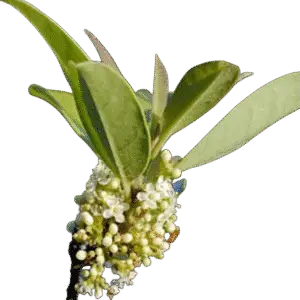
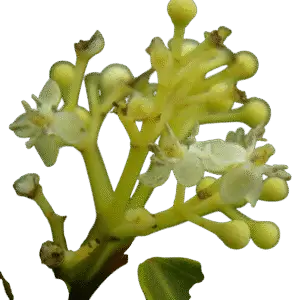
Flower Color: Creamy white to pale greenish-yellow
Flower Characteristics: Large, branched panicles of small, star-shaped flowers that are highly fragrant, especially at night.
Flowering Season: Winter to spring
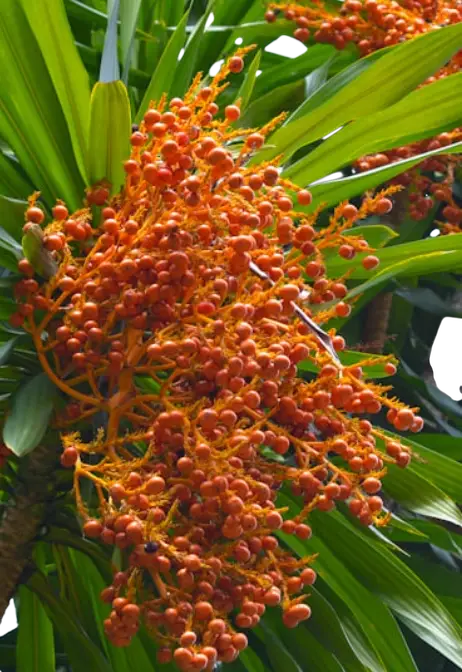
Fruit: Showy, pea-sized berries that turn bright orange or red when ripe
Wildlife and Ecology: Flowers attract moths and bees; birds are highly attracted to the colorful berries
Horticultural Notes: Grown from cuttings, seed
Comments:





Reviews
There are no reviews yet.