
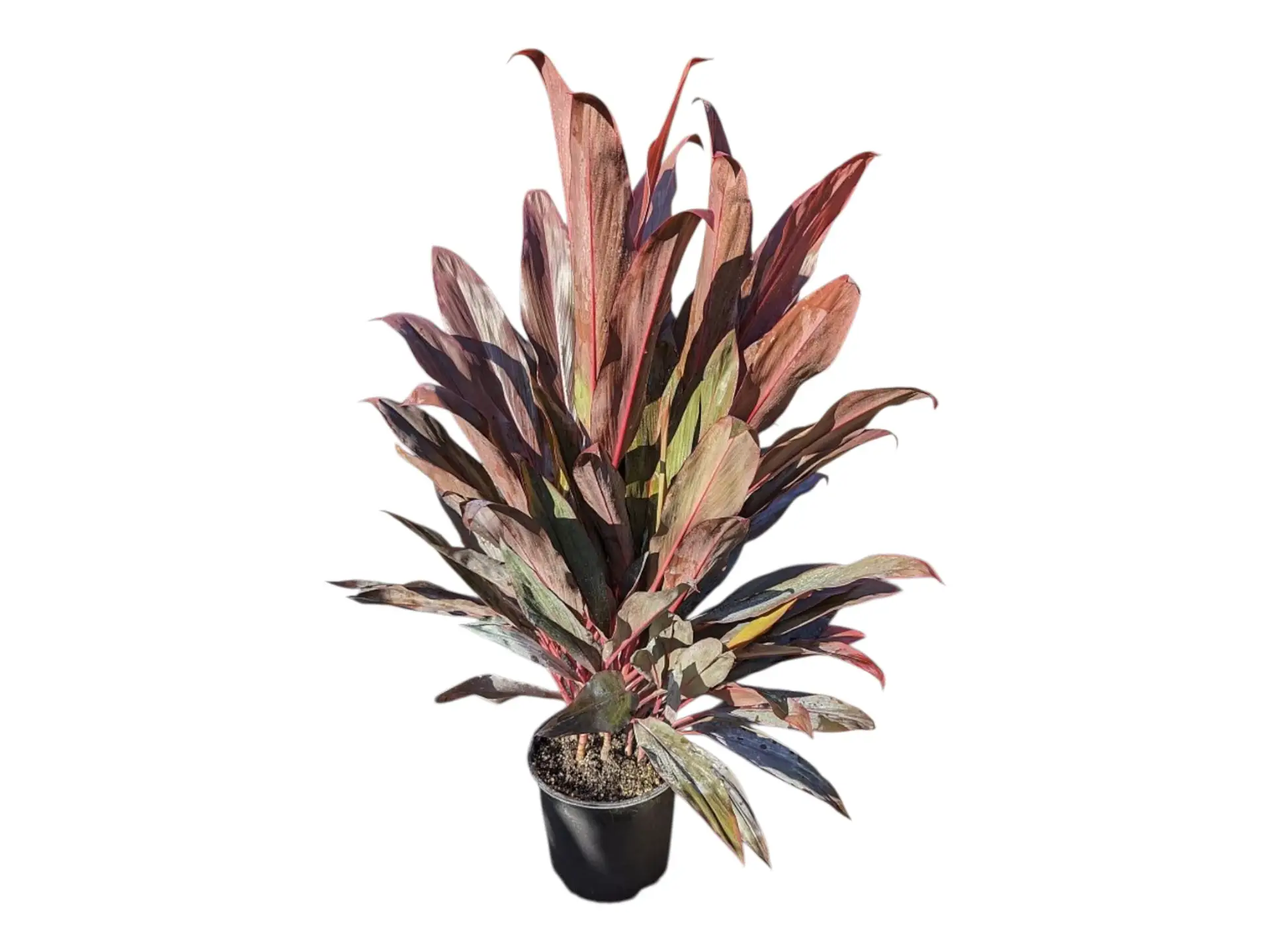
General Landscape Uses: One of the most popular and dependable accent plants for injecting bold, tropical color into landscapes. Used extensively for layered borders, foundation plantings, pool-deck backdrops, and dramatic grouped clusters. Its striking upright form makes it an excellent choice for framing doorways, filling narrow side yards, or serving as a colorful center “thriller” in large accent pottery.
Ecological Restoration Notes: Not used in local ecological restoration.
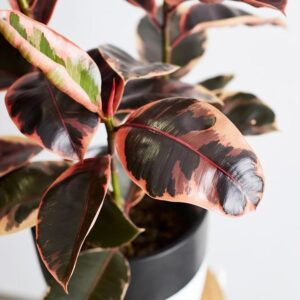
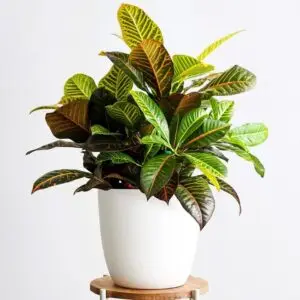
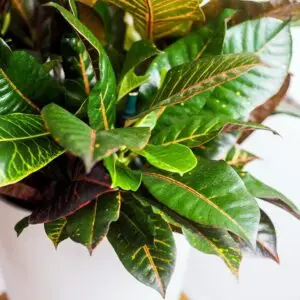
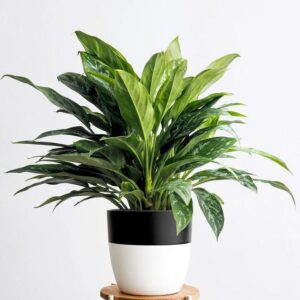
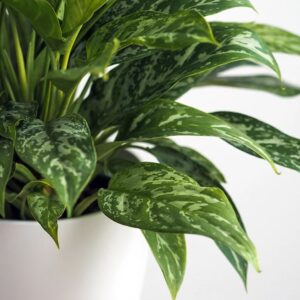
Description: A striking, erect, evergreen tropical shrub with a cane-like growth habit. It features large, broad, strap-shaped leathery leaves that emerge as a bright, fiery fuchsia-pink and mature into an intense, deep metallic plum-maroon or rich burgundy.
Dimensions: Height 4 – 6 ft.; Spread 3 – 4 ft.
Growth Rate: Moderate
Native Range: Southeast Asia, Papua New Guinea, and the Pacific Islands
Native Habitats: Wet tropical forests, coastal plains, and open volcanic slopes
Soils: Thrives in rich, moist, organic-rich soils but adapts successfully to sandy loams.
Nutritional Requirements: Moderate
Salt Water Tolerance: Low
Salt Wind Tolerance: Low to moderate
Drought Tolerance: Moderate
Light Requirements: Part Sun
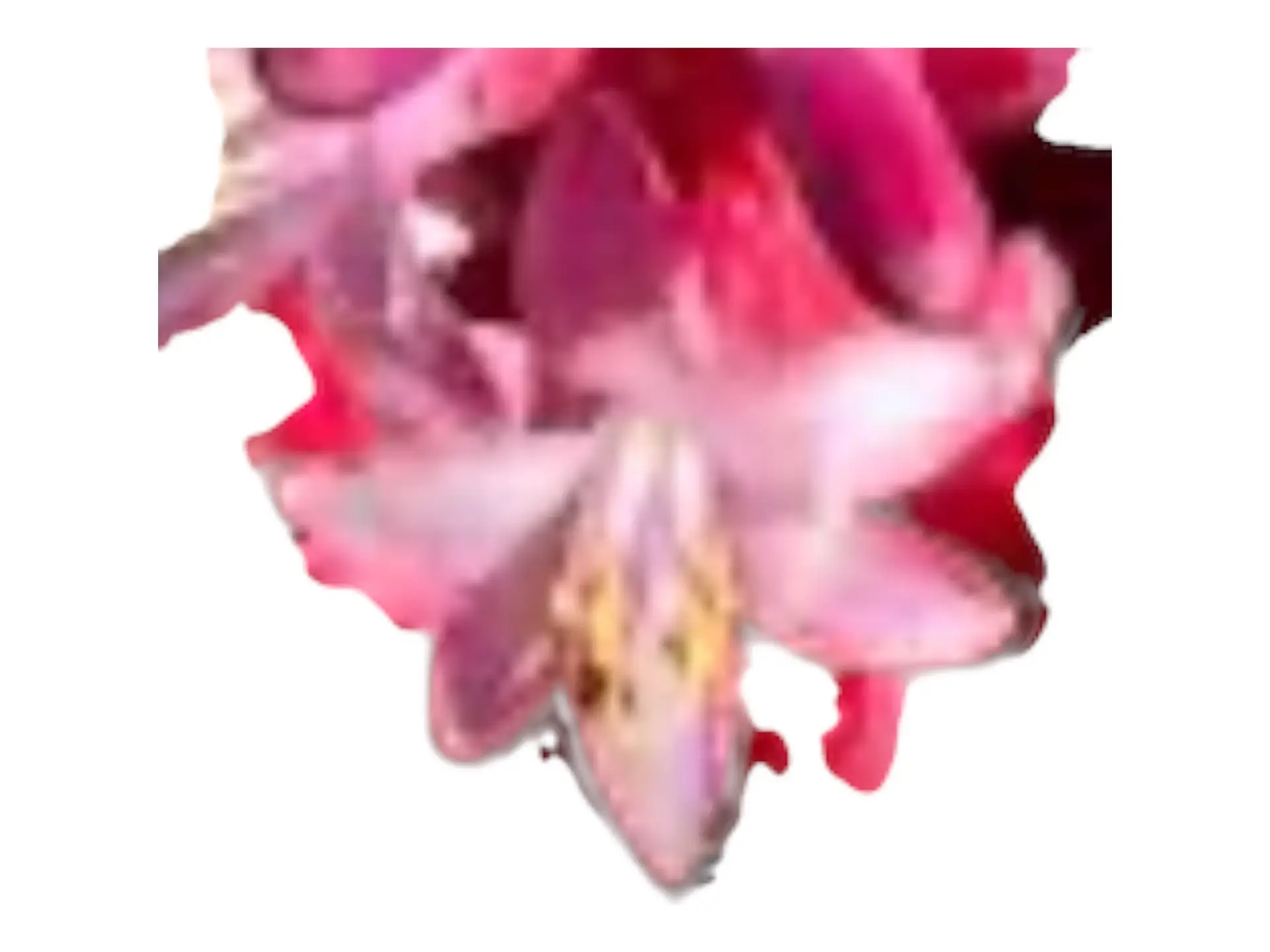
Flower Color: Soft lavender to creamy white
Flower Characteristics: Small, inconspicuous star-shaped flowers borne on long, drooping branched panicles that emerge from the center of the leaf crowns.
Flowering Season: Late winter to early spring
Fruit: Small, round, bright red berries follow the flowers, though they are rarely seen in standard manicured landscapes.
Wildlife and Ecology: Provides excellent architectural cover for small garden lizards and tree frogs. The flowers attract honeybees and butterflies. It is highly deer-resistant due to the fibrous texture of the mature stalks.
Horticultural Notes: Propagated by cuttings
Comments:



Reviews
There are no reviews yet.