
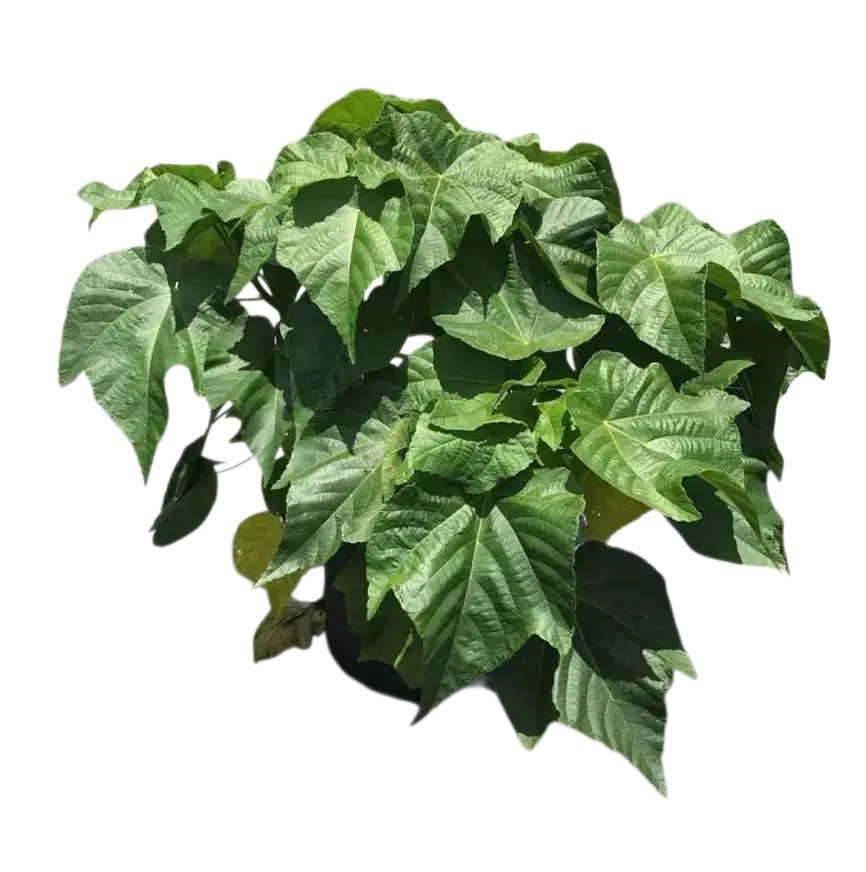

General Landscape Uses: Specimen plant, accent shrub, butterfly gardens, informal hedge
Ecological Restoration Notes: Not used for restoration. It is a cultivated hybrid (not native) and is not considered invasive.
Description: A mounding, multi-stemmed evergreen shrub with large, heart-shaped (cordate) leaves that have a coarse, slightly fuzzy texture.
Dimensions: Height 6 – 8 ft.; Spread 6 – 8 ft.
Growth Rate: Fast
Native Range: Tropical Africa and Madagascar
Native Habitats: Forest margins and scrublands
Soils: Well-drained, sand, loam, limestone
Nutritional Requirements: Moderate
Salt Water Tolerance: Low
Salt Wind Tolerance: Low
Drought Tolerance: Moderate
Light Requirements: Full to part sun
Flower Color: Pink
Flower Characteristics: Large, hemispherical clusters of 5-petaled flowers.
Flowering Season: Late fall to spring
Fruit: Rarely produces fruit; usually sterile or non-showy.
Wildlife and Ecology: Highly attractive to bees, butterflies, and hummingbirds, providing a vital food source when other tropical plants are dormant.
Horticultural Notes: Propagated by air layering, cuttings
Comments: In South Florida, it is often called the “Azalea of the South” because it provides a massive flush of color in a climate where true azaleas often struggle. It is cold hardy to about 25°F–30°F; frost may damage the leaves, but the plant usually rebounds quickly in the spring.


Reviews
There are no reviews yet.