

General Landscape Uses: Specimen tree, accent plant
Ecological Restoration Notes: A vital component of pine rockland and coastal coppice restoration in its native range
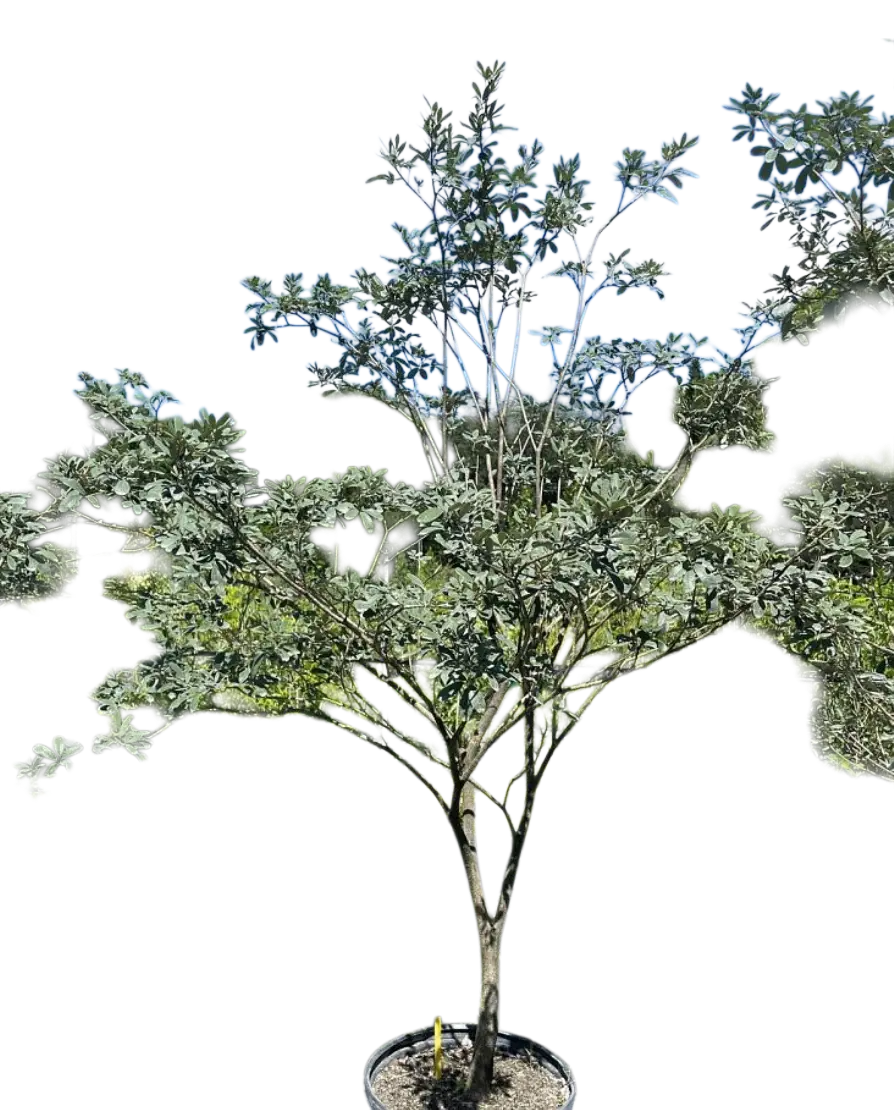
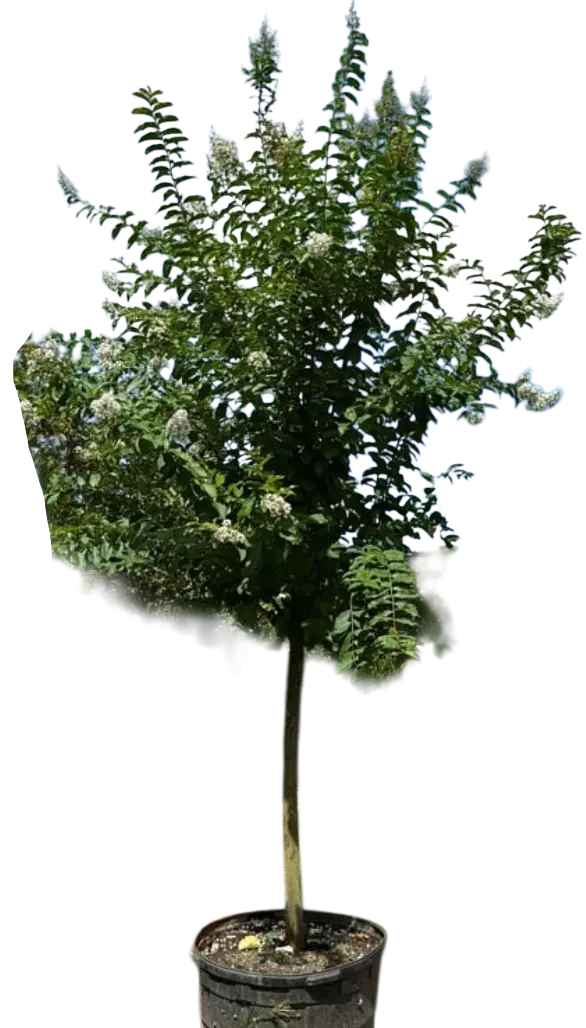
Description: A small, often multi-trunked deciduous to semi-evergreen tree. It features pale, corky bark and palmate leaves (usually 5 leaflets) with a distinct silvery-green or “dusty” hue.
Dimensions: Height 15 – 25 ft.; Spread 10 – 15 ft.
Growth Rate: Slow to moderate
Native Range: The Bahamas, Turks and Caicos, and parts of Cuba
Native Habitats: Dry broadleaf evergreen formations (coppice), pine rocklands, and rocky coastal ridges.
Soils: Well-drained, rock, sand, alkaline
Nutritional Requirements: Low
Salt Water Tolerance: Moderate
Salt Wind Tolerance: High
Drought Tolerance: High
Light Requirements: Full Sun
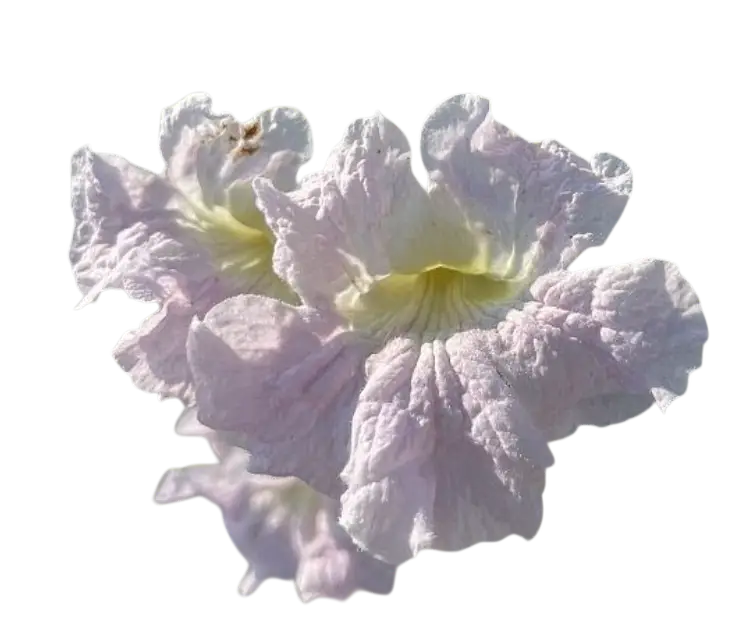
Flower Color: Pale pink to white with a yellow throat
Flower Characteristics: Trumpet-shaped blossoms produced in small clusters.
Flowering Season: Spring
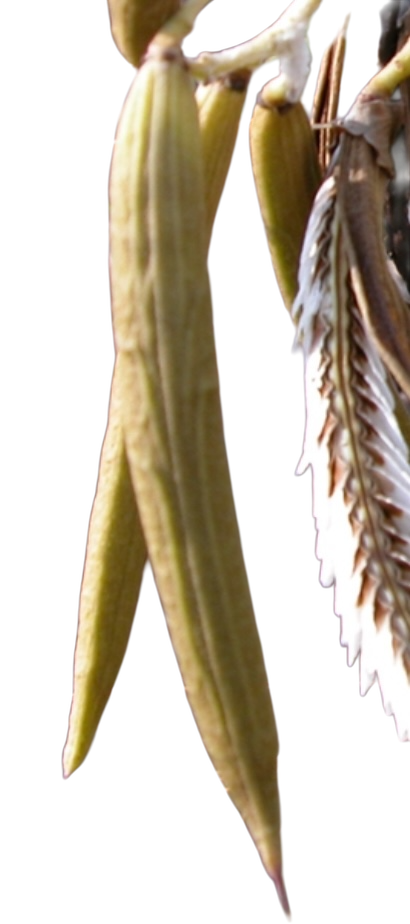
Fruit: Long, slender green pods that turn brown and split to release winged, wind-dispersed seeds.
Wildlife and Ecology: Flowers are a significant nectar source for bees and butterflies. Birds often use the dense, twiggy branch structure for nesting.
Horticultural Notes: Propagated by seed, cuttings
Comments:






Reviews
There are no reviews yet.