
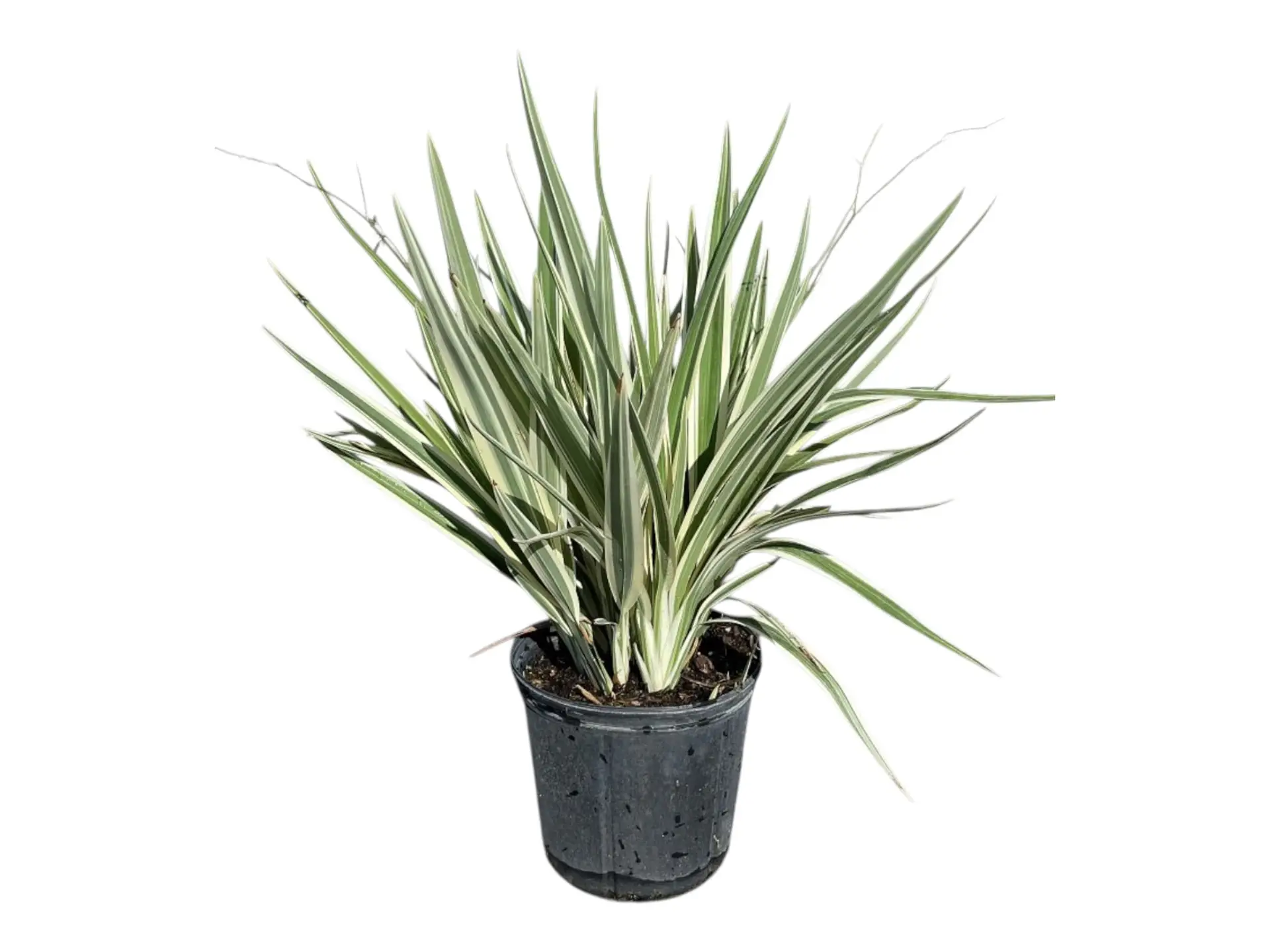
General Landscape Uses: An outstanding choice for adding structural contrast and year-round color to borders, modern accent plantings, and woodland gardens. Its strap-like, striking foliage makes it highly effective as a mass-planted groundcover beneath light tree canopies, as a neat pathway edger, or as a contrasting “thriller” in commercial patio planters.
Ecological Restoration Notes: Not used in local ecological restoration. This is an exotic ornamental cultivar native to Australia and is strictly used for managed commercial and residential landscapes.
Description: A robust, clump-forming evergreen perennial featuring a grass-like or iris-like growth habit. It boasts wide, strap-shaped leathery leaves that are dramatically striped with deep green centers and bright, clean cream-to-white margins.
Dimensions: Height 1.5 – 2.5 ft.; Spread 1.5 – 2.5 ft.
Growth Rate: Moderate
Native Range: Tasmania and southeastern Australia
Native Habitats: Moist, shaded mountain forests, coastal scrub margins, and wet sclerophyll forests.
Soils: Sand, loam, clay
Nutritional Requirements: Low to moderate
Salt Water Tolerance: Low
Salt Wind Tolerance: Moderate
Drought Tolerance: Moderate to high
Light Requirements: Part sun
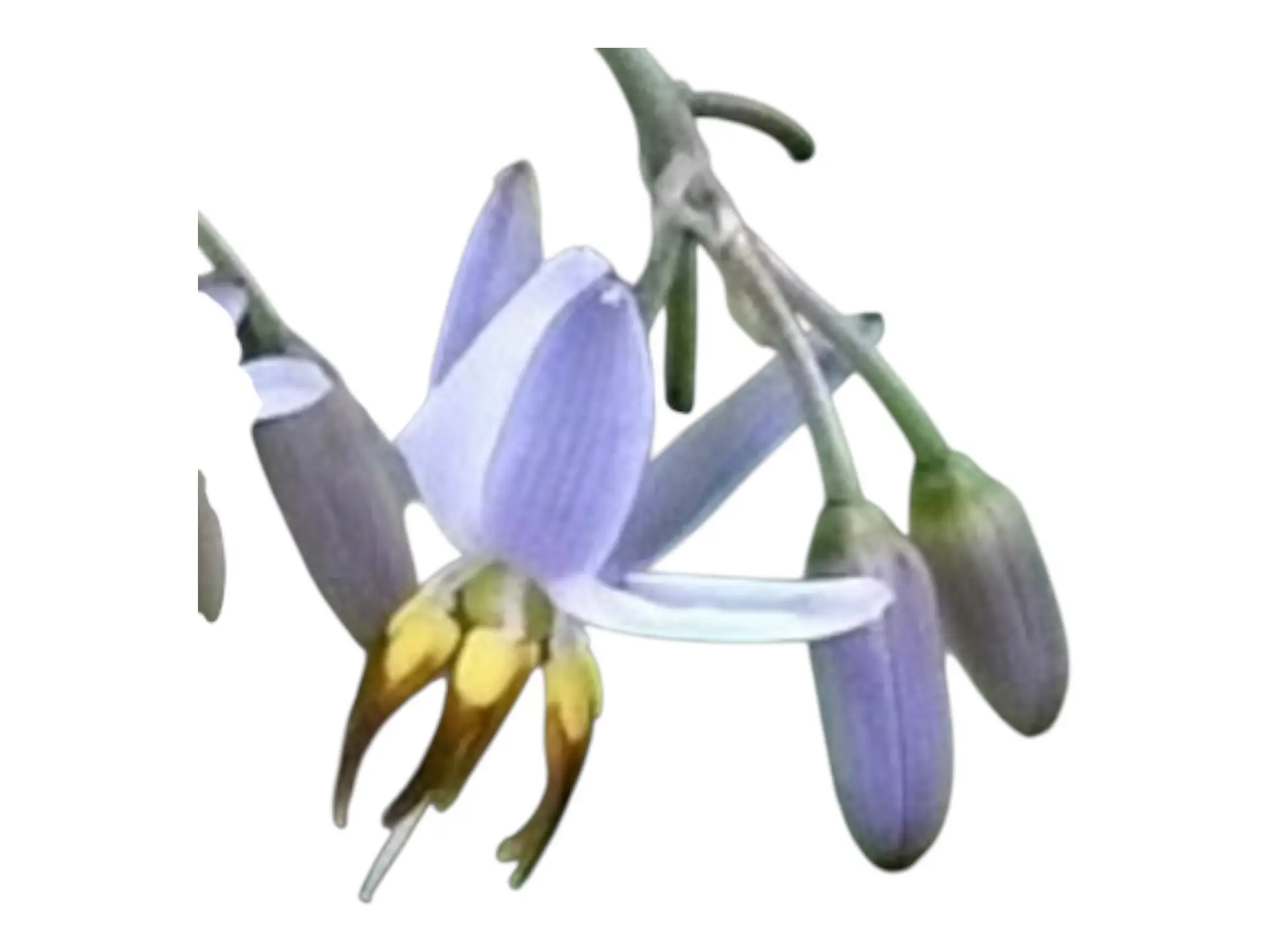
Flower Color: Light violet-blue to pale lavender petals accented by prominent, bright yellow anthers.
Flower Characteristics: Small, nodding, star-shaped blossoms carried on tall, open, panicles (airy branching stalks) that rise well above the foliage clump.
Flowering Season: Mid-spring to early summer
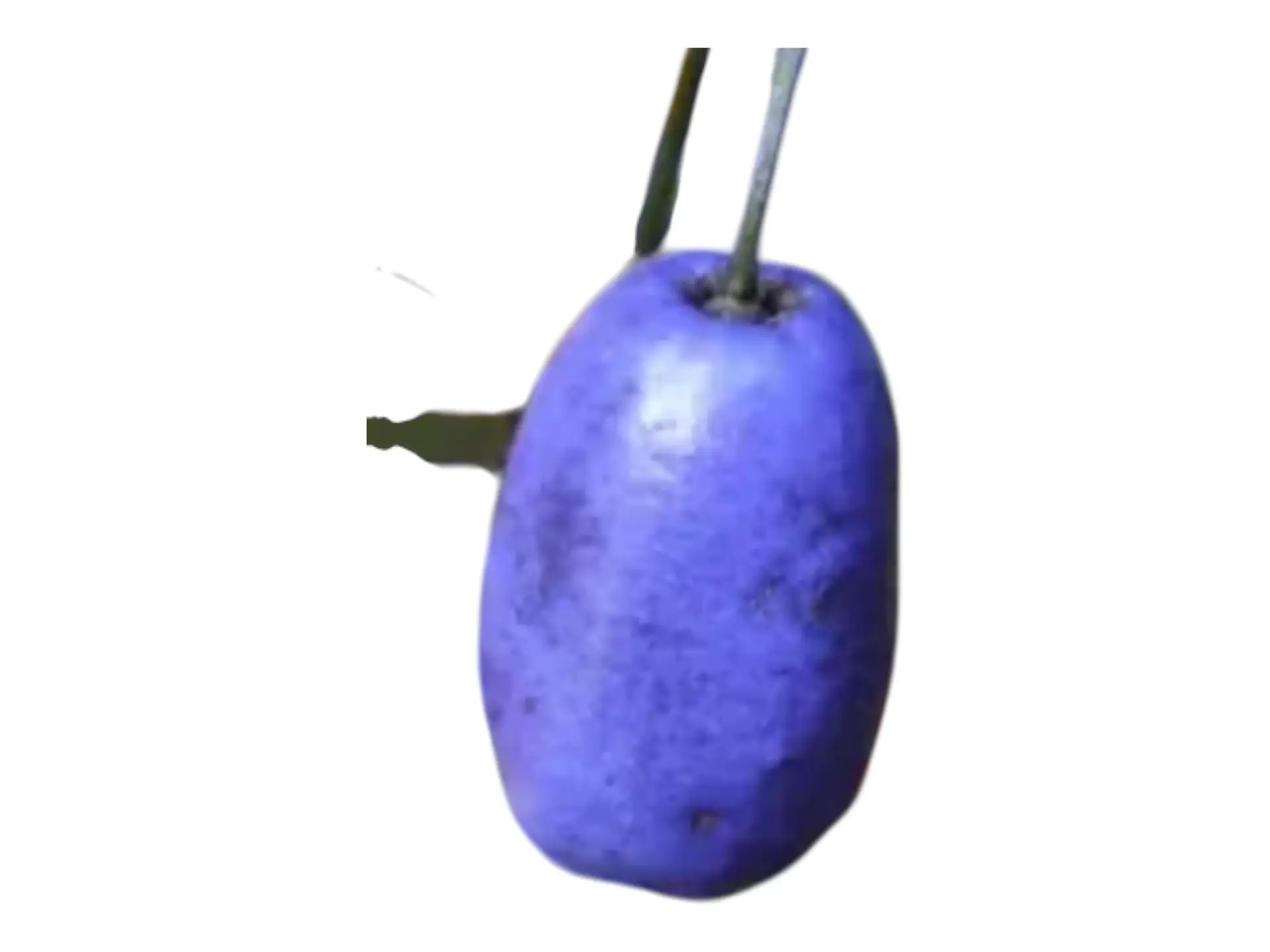
Fruit: Striking, glossy, round berries that mature to an intense, metallic electric-blue or purple color. The berries persist on the stalks for several weeks after blooming.
Wildlife and Ecology: Highly deer-resistant and rabbit-resistant due to the tough, fibrous nature of the leaves. The small flowers attract native pollinators, and the colorful berries are occasionally visited by small foraging birds.
Horticultural Notes: Grown from division
Comments:


Reviews
There are no reviews yet.