
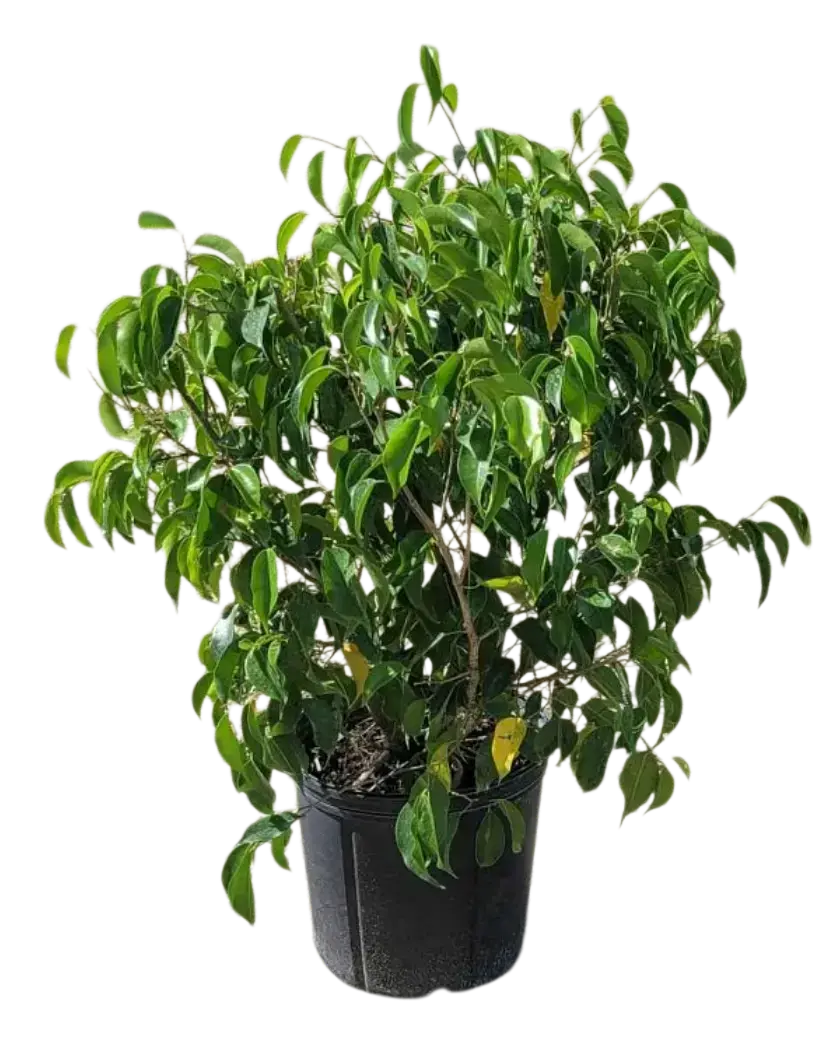


General Landscape Uses: Formal hedge, privacy screen
Ecological Restoration Notes: Avoid because it is invasive.
Description: A broad-leaved evergreen tree with a graceful, drooping (weeping) habit. The bark is light gray and smooth, and the leaves are glossy, oval, and end in a distinctive “drip tip.” The stems contain a milky white latex sap.
Dimensions: Height 40 – 60 ft.; Spread 60 – 100 ft.
Growth Rate: Fast
Native Range: Southeast Asia and Australia
Native Habitats: Tropical rainforests and humid woodlands
Soils: Well-drained, sand, loam, clay
Nutritional Requirements: Moderate
Salt Water Tolerance: Low
Salt Wind Tolerance: Moderate
Drought Tolerance: High
Light Requirements: Full sun to shade
Flower Color: Inconspicuous
Flower Characteristics: Flowers are hidden inside the fruit.
Flowering Season: All year
Fruit: Small (0.5 inch), globose figs that turn from green to orange or red-purple when ripe.
Wildlife and Ecology: The fruit is a significant food source for birds and bats, which spread the seeds into native hammocks. In its native range, it has a symbiotic relationship with fig wasps.
Horticultural Notes: Propagated by cuttings, air layering, seed
Comments: The tree is famous for “dropping leaves” whenever it is moved or environmental conditions change. This is a survival mechanism, not necessarily a sign of death. Warning: The milky sap is a skin irritant and can be toxic to pets if ingested.






Reviews
There are no reviews yet.