
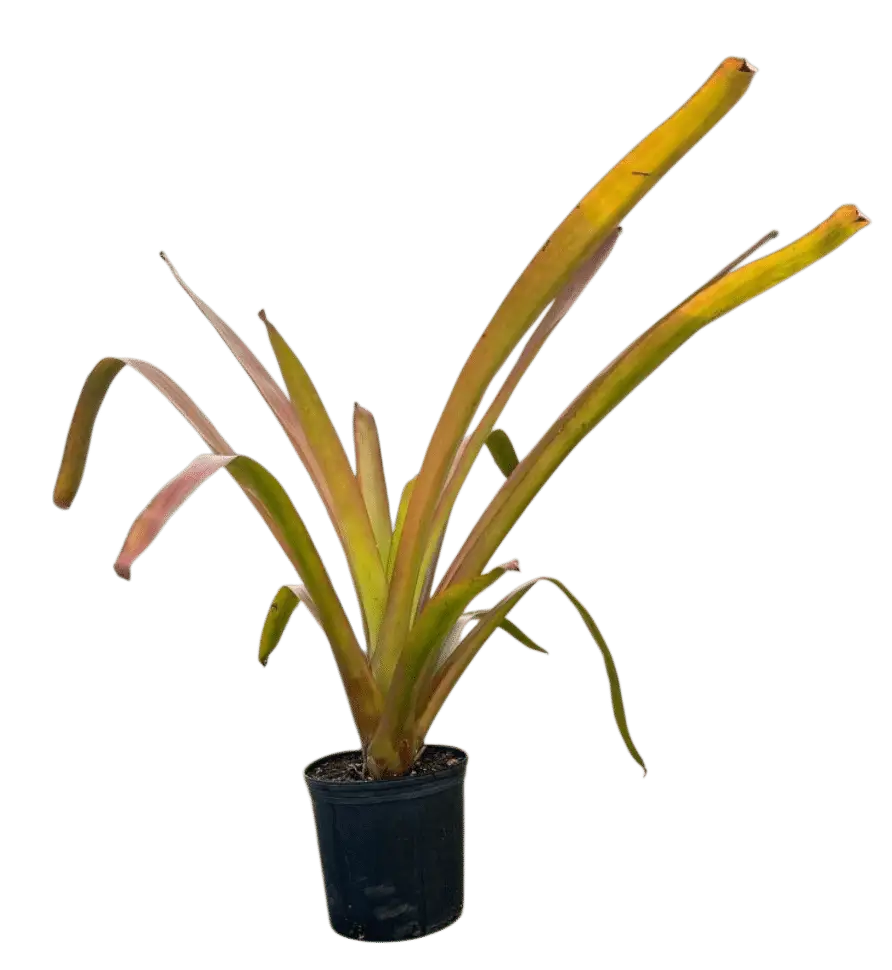

General Landscape Uses: Mass planting for high-impact groundcover, dramatic focal point in rock gardens, or as a large container specimen. Excellent for “fire-scaping” and low-maintenance tropical borders.
Ecological Restoration Notes: Limited use in true restoration as it is a cultivated selection, but it provides valuable “phytotelmata” (water-holding tanks) that support micro-fauna in urban heat islands.
Description: A large, rosette-forming epiphytic or terrestrial bromeliad. Leaves are stiff, strap-shaped, and serrated with small spines. Foliage turns vivid orange in high light.
Dimensions: Height 3 – 5 ft.; Spread 3 – 4 ft.
Growth Rate: Moderate
Native Range: Brazil
Native Habitats: Coastal sand dunes (restinga) and forest edges where light is abundant.
Soils: Well-drained, sand
Nutritional Requirements: Low
Salt Water Tolerance: Low
Salt Wind Tolerance: High
Drought Tolerance: High
Light Requirements: Full Sun
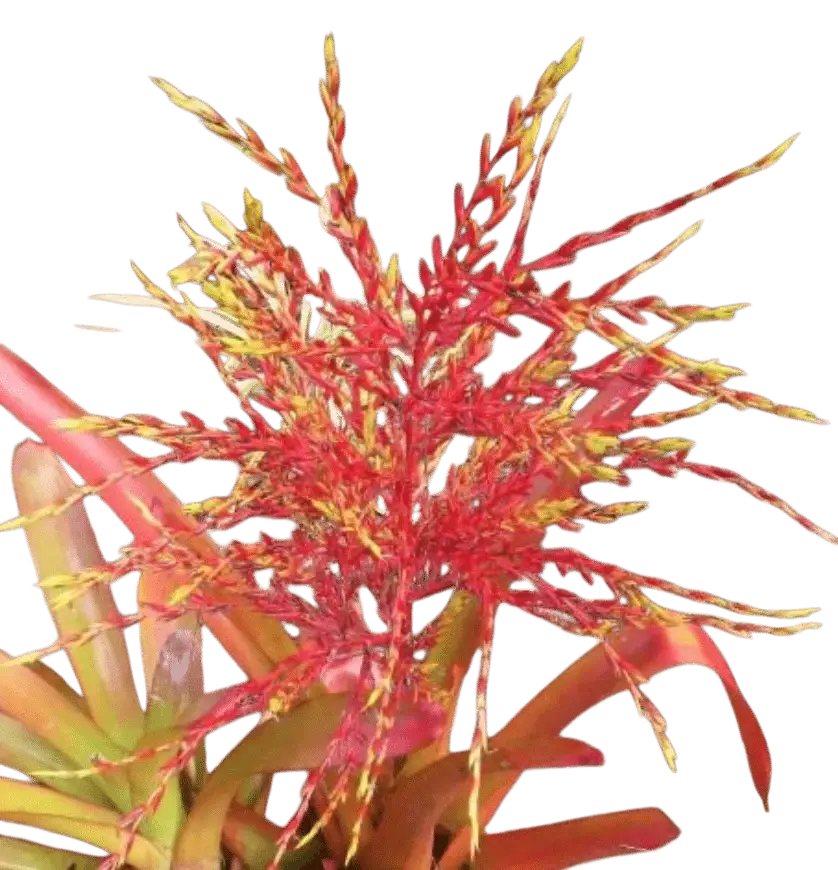
Flower Color: Red and yellow bracts with small purple/blue flowers.
Flower Characteristics: A massive, branched inflorescence (flower spike) that rises 2–3 ft above the foliage.
Flowering Season: Spring to summer
Fruit: Small, berry-like globes following the fade of the flowers.
Wildlife and Ecology: The central tank collects rainwater, creating a miniature ecosystem for frogs and beneficial insects. Hummingbirds are attracted to the tall flower spikes.
Horticultural Notes: Grown from offshoot, seed, tissue culture
Comments:



Reviews
There are no reviews yet.