
General Landscape Uses: Specimen plant, edible
Ecological Restoration Notes: Primarily used in agroforestry and coastal protection. While not a “wild” species (being a selected cultivar), it serves an ecological role in providing canopy cover and soil stabilization in hurricane-prone tropical coastlines.
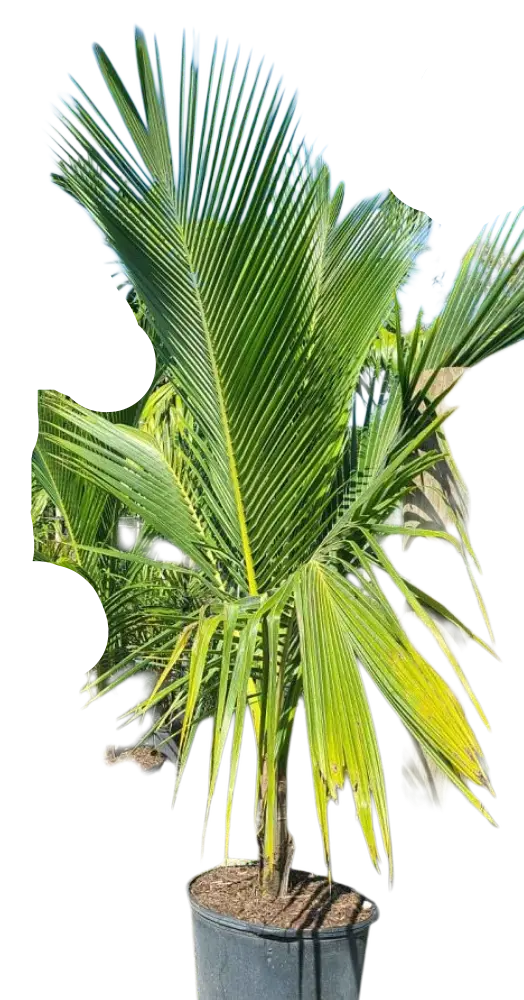
Description: A dwarf variety of coconut palm with a slender, straight trunk that lacks the bulbous base (bole) of tall varieties. It is easily identified by the deep golden-orange color of its leaf stalks (petioles), flower bracts, and immature coconuts.
Dimensions: Height 35 – 60 ft.; Spread 15 – 20 ft.
Growth Rate: Moderate to fast
Native Range: Southeast Asia (Malaysia)
Native Habitats: Cultivated in tropical maritime climates; thrives in humid, frost-free lowland areas near the coast.
Soils: Well-drained, sand, loam
Nutritional Requirements: High
Salt Water Tolerance: Moderate
Salt Wind Tolerance: High
Drought Tolerance: Low to moderate
Light Requirements: Full sun
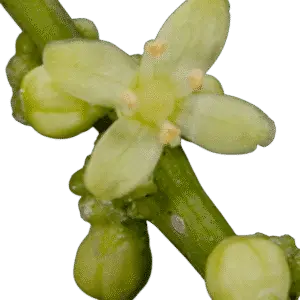
Flower Color: Golden-yellow to ivory
Flower Characteristics: Large, branched inflorescences. Being a dwarf variety, it is primarily self-pollinating, which helps it maintain its “Golden” characteristics through seed propagation.
Flowering Season: All year
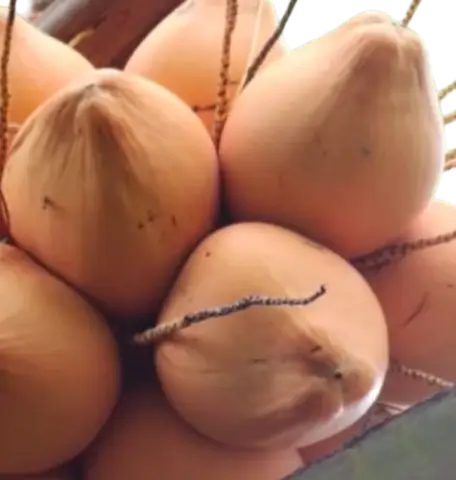
Fruit: Medium-sized, oval-shaped coconuts with a distinct bright orange/gold husk. The water inside is exceptionally sweet, and the meat is tender.
Wildlife and Ecology: The flowers are a major attractant for honeybees and native pollinators. The dense crown provides nesting sites for tropical birds.
Horticultural Notes: Grown from seed
Comments:






Reviews
There are no reviews yet.