
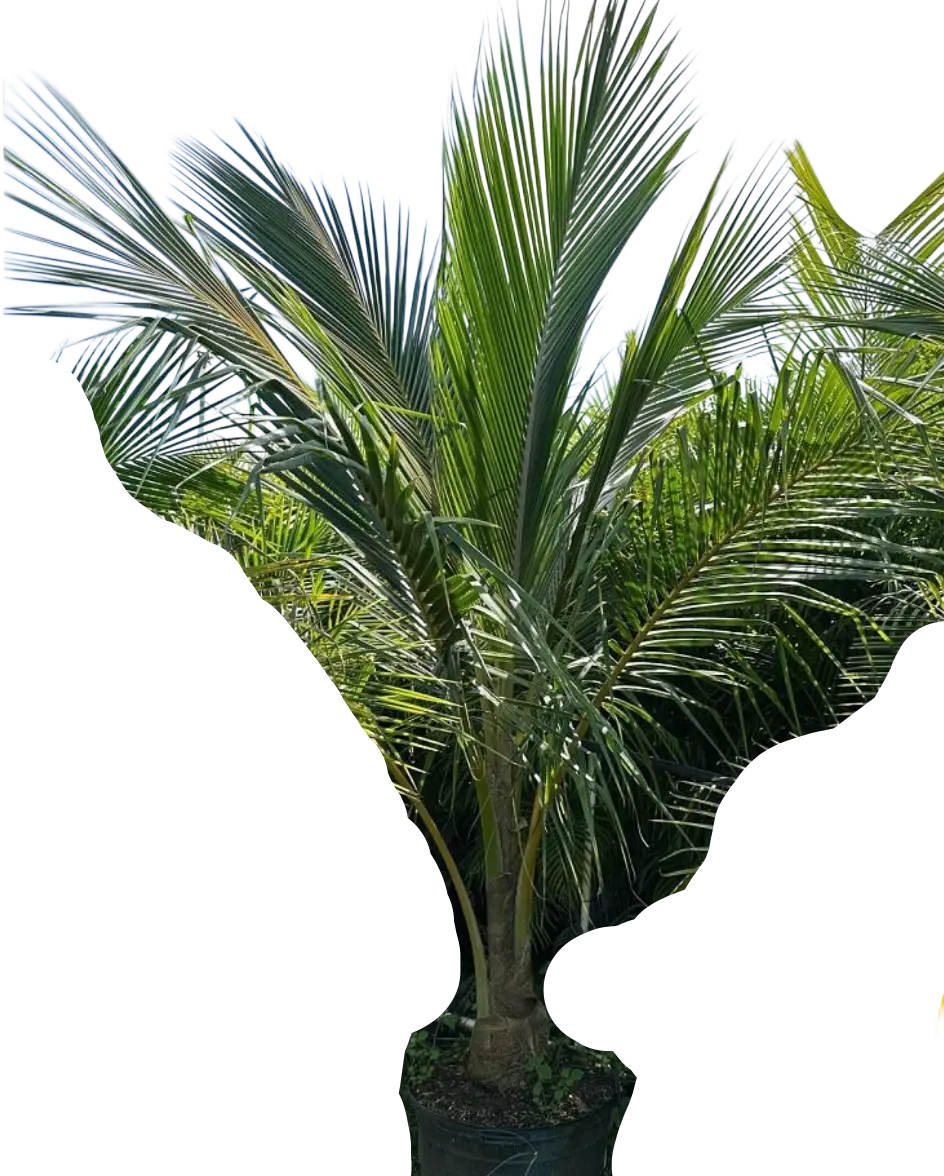
General Landscape Uses: Specimen plant, edible
Ecological Restoration Notes: While not typically used for wild restoration (as it is a cultivated variety), it is used in coastal stabilization projects in tropical regions. Its extensive root system helps bind sandy soils against erosion.
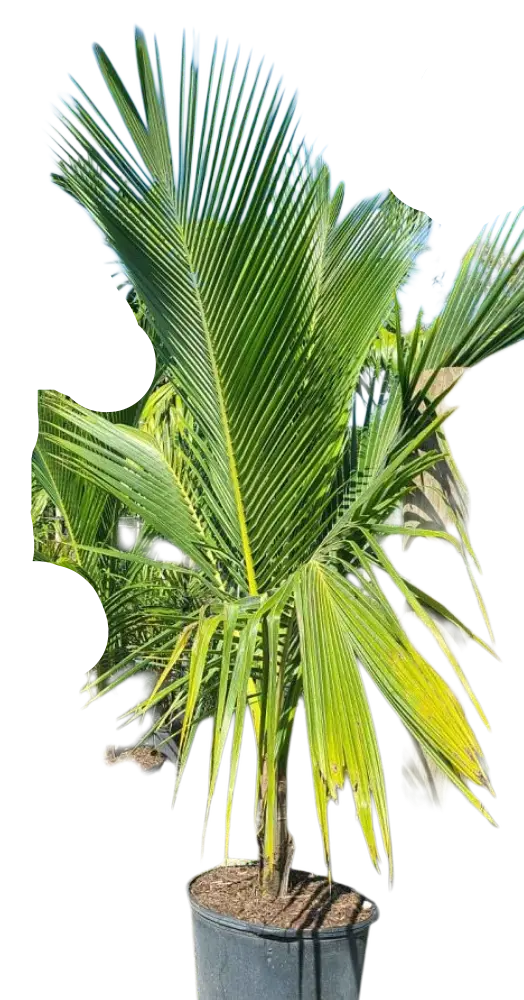
Description: A single-trunked palm characterized by its “dwarf” habit (it lacks the swollen “bole” or base seen in tall varieties). The fronds are pinnate (feather-like) and the petioles (leaf stalks) and immature fruits exhibit a distinct, bright golden-yellow hue.
Dimensions: Height 30 – 60 ft.; Spread 15 – 25 ft.
Growth Rate: Moderate
Native Range: Malay Peninsula (Southeast Asia)
Native Habitats: Tropical coastal regions, thrives in humid, frost-free maritime environments.
Soils: Well-drained, sand, loam, pH (5 – 8)
Nutritional Requirements: High
Salt Water Tolerance: Moderate
Salt Wind Tolerance: High
Drought Tolerance: Moderate
Light Requirements: Full sun
Flower Color: Creamy white to light yellow
Flower Characteristics: Produced on a branched inflorescence (spadix) emerging from a woody boat-shaped bract (spathe). It is monoecious, meaning both male and female flowers are on the same plant.
Flowering Season: All year
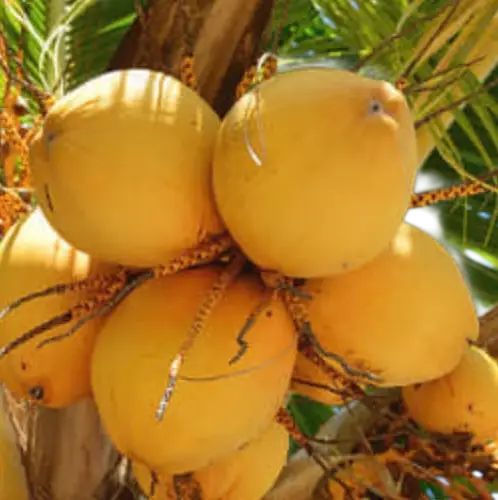
Fruit: Large, ovoid drupes with a bright yellow husk when immature. The “meat” is sweet and the “water” is abundant.
Wildlife and Ecology: The flowers are a significant source of nectar for honeybees and other pollinators. In its native habitat, it provides nesting sites for various tropical bird species.
Horticultural Notes: Grown from seed
Comments:







Don Gordito Maximus –
Great delivery and service!!! Amazing looking coconut palm tree just wow, this is by far the best place I have found in Miami to get my plants (in fairness only have ordered coconut palm trees from Smarty Plants Nursery!!!)