

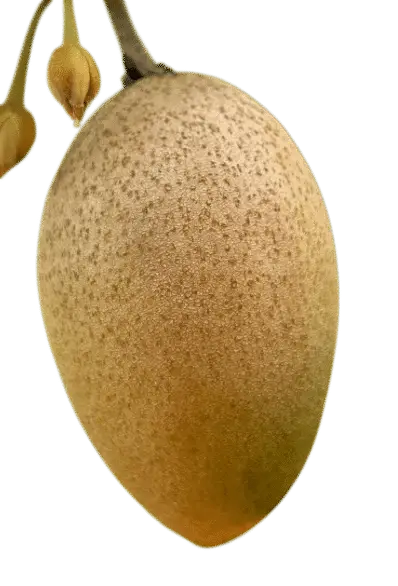

General Landscape Uses: Ornamental fruit tree, specimen plant, container
Ecological Restoration Notes: While ‘Alano’ is a cultivated variety, the species Manilkara zapota is a keystone species in its native range, providing critical food for bats, primates, and birds.
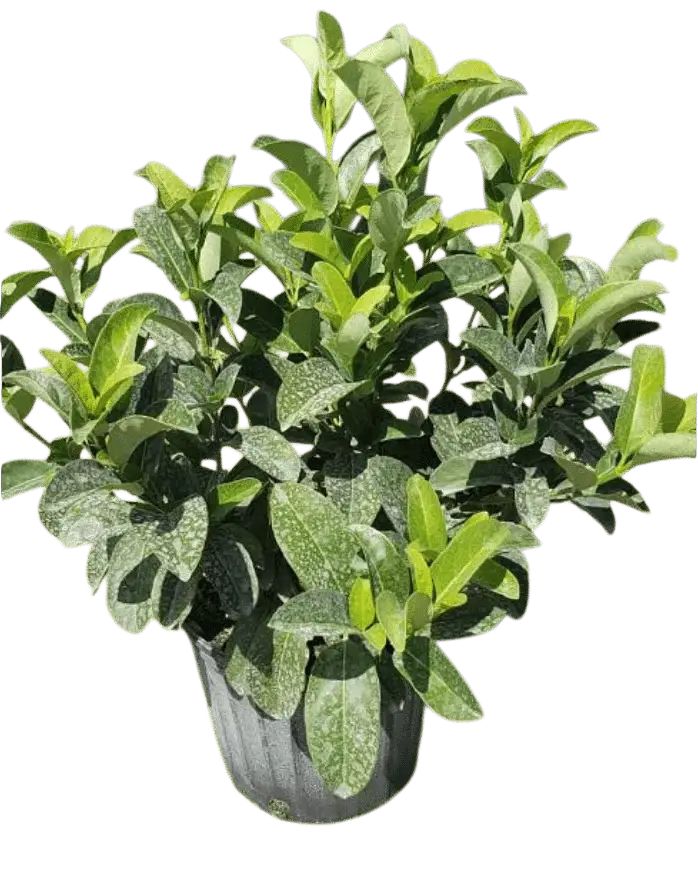
Description: A handsome, long-lived evergreen tree with stiff, glossy, dark-green leaves clustered at the branch tips. The bark contains a white, gummy latex known as chicle. ‘Alano’ is distinguished by its less-brittle branches and more manageable, compact habit compared to other cultivars.
Dimensions: Height 25 – 30 ft.; Spread 15 – 20 ft.
Growth Rate: Slow to moderate
Native Range: Central America and Mexico (Yucatan Peninsula)
Native Habitats: Tropical moist forests and coastal scrub
Soils: Well-drained, rock, alkaline, sand, loam, clay
Nutritional Requirements: Low to moderate
Salt Water Tolerance: Low
Salt Wind Tolerance: High
Drought Tolerance: High
Light Requirements: Full sun
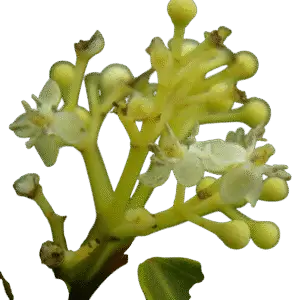
Flower Color: White
Flower Characteristics: Small, bell-shaped flowers produced in the leaf axils. They are self-fertile, so a single tree will produce fruit.
Flowering Season: All year
Fruit: Medium-sized, oval-shaped with a scurfy brown skin. The flesh is light brown, ultra-fine (not gritty), and tastes like brown sugar or maple syrup.
Wildlife and Ecology: The fragrant flowers attract bees and moths. The fruit is a major food source for tropical fruit bats and various mammals in its native range.
Horticultural Notes: Propagated by grafting, air layering
Comments:






Reviews
There are no reviews yet.